An A khata means the property meets every legal and planning rule. A B khata means it has a gap, like no layout approval. An e-khata is the digital record that shows which one you hold. Buy A khata if you want easy loans and resale.
That is the short answer to "A khata vs B khata". It matters most for plot buyers, such as those looking at Adarsh Savana Phase 3 in Devanahalli.
The rest of this guide explains the 2025–2026 changes in Bengaluru. It covers the Greater Bengaluru Authority (GBA), the e-khata rollout, the B khata drive, bank loans, resale and online checks.
This is general information, not legal advice. Rules change often. Check the latest position with a property lawyer and the GBA portal before you pay.
What Is a Khata?
A khata is a record kept by the city. It lists who owns a property, its size, its location and the tax due on it. The word means "account" in Kannada.
A khata is not a title document. Your sale deed proves you own the property. The khata only shows that the city knows about it and taxes it.
You still need a khata for most tasks:
- Paying property tax
- Getting a building plan approved
- Getting water, power and sewer lines
- Getting a bank loan
- Selling or gifting the property
A Khata vs B Khata vs E Khata at a Glance
| Point | A khata | B khata | E-khata |
|---|---|---|---|
| What it is | Property meets all rules | Property has a legal or planning gap | Digital khata record on e-Aasthi |
| Who issues it | GBA city corporations (earlier BBMP) | GBA city corporations (earlier BBMP) | GBA, through the e-Aasthi portal |
| Building plan | Can get approval | Hard until converted | Needed for plan approval since July 2025 |
| Bank loan | Most banks lend | Few banks lend, often at higher rates | Banks ask for it at loan time |
| Resale | Smooth | Slower, lower price | Needed for registration |
| Trade licence | Yes | Usually no | Depends on A or B status |
The key point: e-khata is a format, not a third category. Your e-khata will show either an A status or a B status.
What Is an A Khata?
An A khata goes to a property that ticks every box. The land has a conversion order for non-farm use. The layout or building has plan approval. The owner has paid all taxes and fees.
With an A khata, you can:
- Apply for a building plan
- Get a loan from any major bank
- Sell the property without extra checks
- Apply for a trade licence if the zone allows it
For a plot buyer, an A khata is the best sign that the layout is legal. You still need to check the title chain. Our list of 14 documents to check before buying a plot covers that.
What Is a B Khata?
A B khata is a separate register. The city started it so it could collect tax from properties that broke a rule. It does not make the property legal.
Common reasons a property lands in the B register:
- The land has no conversion order from farm use
- The layout has no approval from BDA, BMRDA or another planning body
- The building has no approved plan
- The building breaks the approved plan
- The site sits in a revenue layout that the city never approved
In January 2026, Deccan Herald reported that the state cabinet approved B-to-A conversion in all urban local bodies. The report said the model was already in use under the GBA. It put the number of unauthorised properties in scope at about 10 lakh.
A B khata is also why a layout approval check comes before any token payment.
Why B Khata Is a Risk for You
A B khata property can face three problems. Banks may refuse a loan. The city may refuse a building plan. A future buyer may ask for a big discount.
Some sellers call a B khata "just as good". It is not. You pay tax, but you do not get the same rights. For a developer layout, read the approvals listed for Adarsh Savana Phase 3 as a model of what to ask for.
What Is an E-Khata?
An e-khata is the digital khata. It lives on the e-Aasthi portal at bbmpeaasthi.karnataka.gov.in. Each property gets a unique ID called an ePID.
The e-khata links your khata to other records. These include your sale deed on Kaveri, your tax payments and your Aadhaar. The goal is to stop fake khatas and double sales.
Draft vs Final E-Khata
The portal shows two stages:
- Draft e-khata. The system builds this from old records. It may have errors. You can check it and ask for fixes.
- Final e-khata. You upload your documents and the city verifies them. The final version is the one you need for registration, loans and transfers.
When E-Khata Became Required
Deccan Herald reported that BBMP made e-khata compulsory for building plan approvals from 1 July 2025. In January 2026, it reported that five sub-registrars were suspended for registering properties without the mandatory e-khata check.
In May 2026, the GBA said it would open 52 centres from 16 May. They handle final e-khata, new e-khata and B-to-A conversion. Banks also ask for the e-khata, as our plot loan vs home loan guide explains.
What Changed With the GBA in 2025–2026
The Greater Bengaluru Governance Act, 2024 replaced the old BBMP set-up. Deccan Herald reported that the Act took effect on 15 May 2025. The city now has five corporations: Central, East, North, South and West.
What this means for you:
- Your khata now sits with one of the five city corporations, under the GBA.
- The e-Aasthi portal still runs your khata record.
- Old BBMP khatas remain valid. You do not need a new one because the body changed.
- Some news pages and forms still say "BBMP". Treat BBMP and GBA as the same office for khata work in 2026.
Plots Outside GBA Limits
Many plotted layouts sit outside the GBA area. Devanahalli is one example. Here, gram panchayats or town councils keep the property record, not the GBA.
For village land, the state uses the e-Swathu portal. The record there is a Form 9 or Form 11.
The same A-versus-B logic applies. A site in an approved layout gets a clean record. A site in an unapproved layout carries a gap.
In March 2025, ETV Bharat reported that the cabinet cleared B khatas for unauthorised village properties. Gram panchayats would issue them. The report put the number of such properties at about 90 lakh. Read the current rules with a lawyer before you rely on them.
If you are looking at Devanahalli plots, ask for the layout approval and the e-Swathu record together.
The B Khata to A Khata Conversion Drive
The state has tried several times to move B khata properties into the A register.
Timeline of the Drive
| Date | What happened |
|---|---|
| March 2025 | Cabinet clears B khatas for unauthorised village properties |
| 15 May 2025 | Greater Bengaluru Governance Act takes effect |
| 1 July 2025 | E-khata needed for building plan approval |
| January 2026 | Cabinet extends B-to-A conversion to all urban local bodies |
| 15 May 2026 | GBA cuts the charge from 5% to 2% for 100 days |
| 16 May 2026 | 52 GBA centres open under the Bhu Guarantee drive |
| Late August 2026 | The 100-day window closes |
Deccan Herald gave 22 August as the last day of the 2% window.
Who Can Convert
Deccan Herald's May 2026 report names one clear bar. Properties on land reserved for roads or public infrastructure cannot convert.
For every other condition, check the GBA portal or ask at a GBA centre. Ask about:
- The cut-off date your B khata must predate
- Whether all tax dues must be clear first
- Whether farm land needs a conversion order first
- Whether a court case on the title blocks the file
If you would rather skip this process, compare ready A khata sites on our plots in Bangalore page.
What Conversion Costs
The main cost is a betterment charge. This is a fee the city takes to pay for roads, drains and other works in your area.
Deccan Herald reported the charge as 5% of the guidance value. The guidance value is the government's minimum rate for your property. On a site with a guidance value of ₹1 crore, 5% comes to ₹5 lakh. At the 2% window rate, it would have been ₹2 lakh.
Check the application fee and the processing time on the GBA portal. Get both in writing before you pay.
How Many Owners Applied
Deccan Herald reported that about 7 lakh B khata properties could gain from the fee cut. It also said fewer than 7,000 owners had applied in the six months before the cut.
Documents to Keep Ready
The GBA portal lists the exact set it needs. Most files draw on these papers:
- Registered sale deed with the full chain of owners
- Current B khata extract
- Property tax receipts
- Encumbrance certificate from Kaveri
- Land conversion order, if the land was once farm land
- Approved building plan, if there is a building
- Aadhaar and PAN
Three Gaps to Ask About
Three gaps often stand between a B khata and a clean record. Knowing them helps you judge a seller's promise.
- No conversion order. The land never moved from farm use to non-farm use.
- Gaps in the owner chain. The city record skips a past owner.
- Survey number mismatch. The deed and the city record show different numbers.
If a seller says "conversion is in process", ask for the application number. Then ask which of these three issues the file faces. A vague answer is a warning.
Can You Get a Loan on a B Khata Property?
This is where A khata vs B khata matters most for your wallet.
Banks look at two things. Is the title clean? Can they sell the property if you stop paying? A B khata weakens both answers.
What you will see in the market:
- Most large banks prefer A khata properties.
- Some lenders fund B khata sites, often at a higher rate or lower loan amount.
- Many lenders ask for the final e-khata before they release money.
- Plot loans already have tighter rules than home loans. A B khata makes them harder still.
Before you pay a token, get the bank's in-principle approval in writing. Our guide on plot loan vs home loan explains how banks set loan amounts for land.
Resale: How the Khata Type Affects Your Exit
The khata type follows the property when you sell.
With an A khata:
- The next buyer can get a loan.
- Registration moves fast once the e-khata is final.
- You can ask a fair market price.
With a B khata:
- Your buyer pool shrinks to cash buyers or small lenders.
- Buyers will ask for a discount to cover the conversion fee.
- Some buyers will walk away once their lawyer reads the record.
Think of the conversion fee as a cost you will pay one way or another. You either pay the city, or you give it to the buyer as a discount.
If you buy land as an investment, factor this into your exit plan. Our guide on whether Devanahalli is a good investment looks at resale in one North Bengaluru market.
How to Check the Khata Online
You can check a khata in about 10 minutes. You need the ePID or the owner's name.
For Property Inside GBA Limits
- Go to bbmpeaasthi.karnataka.gov.in.
- Log in with your mobile number and OTP.
- Search by ePID, ward or owner name.
- Open the record. Check the owner name, site size and address.
- Check the status. Look for "A" or "B" and any note on violations.
- Check whether it shows as draft or final.
Then run the rest of our plot document checklist before you sign.
For Property Outside GBA Limits
- Go to eswathu.karnataka.gov.in.
- Pick the district, taluk and village.
- Search by owner name or property number.
- Download the Form 9 or Form 11 extract.
- Match the survey number with the RTC and sale deed.
What to Match
Your khata must agree with these records:
- The owner name on the sale deed
- The site size on the layout plan
- The survey number on the RTC
- The tax receipts for the last three years
- The encumbrance certificate from Kaveri
Any mismatch is a red flag. Ask the seller to fix it before you sign.
How to Get a Final E-Khata
If you own a property inside city limits, you should hold a final e-khata. Here is the usual flow on e-Aasthi.
- Log in with your mobile number and OTP.
- Find your draft e-khata by ePID or owner name.
- Check each field. Flag any error.
- Upload your sale deed details and your encumbrance certificate.
- Upload your latest tax receipt and your Aadhaar.
- Pay the service fee shown on the portal.
- Track the status until the final e-khata is ready to download.
Keep a PDF of the final e-khata with your sale deed. Your bank and your future buyer will both ask for it. See what lenders check on a plot before you apply for a loan.
Common Errors on Draft E-Khatas
Owners often report these problems on the draft record:
- Wrong spelling of the owner's name
- Wrong site size
- Missing or wrong survey number
- Old owner still listed after a sale
- Wrong ward or corporation
Fix these before you sell. A buyer's lawyer will spot them, and the sale will stall.
Khata Transfer After You Buy
Buying the property does not move the khata into your name. You must apply for a khata transfer, also called mutation.
The steps look like this:
- Register the sale deed at the sub-registrar office.
- Apply on e-Aasthi (or e-Swathu for village land) to change the owner.
- Upload the new sale deed and your ID.
- Pay the transfer fee shown on the portal.
- Download the updated record once approved.
Do this soon after registration. An old owner's name on the khata can cause trouble with tax, loans and resale.
Khata Myths You Will Hear
Brokers and sellers repeat a few claims. Here is how they hold up.
"E-khata means the property is legal." Not true. An e-khata can show a B status. Always read the status line.
"B khata will turn into A khata on its own." Not true. You must apply and pay the charge. The city must then approve the file.
"Paying tax for years makes it A khata." Not true. Tax receipts show you paid. They do not fix a missing approval.
"All B khata properties can convert." Not true. Deccan Herald reported that sites on land reserved for roads or public infrastructure cannot convert.
"A panchayat khata is the same as an A khata." Not always. A panchayat record can also carry a gap. Check the layout approval behind it, a common issue for plots around Devanahalli.
Red Flags in a Khata Record
Stop and ask questions if you see any of these:
- The seller cannot give you an ePID or property number.
- The record shows a different owner from the sale deed.
- The site size on the khata is bigger or smaller than the deed.
- The record carries a violation note.
- Tax is unpaid for several years.
- The seller offers a "khata agent" to sort things out for cash.
- The survey number does not match the RTC.
None of these means the deal is dead. Each one means you need a lawyer's opinion before you pay.
Should You Buy a B Khata Property?
Here is an honest view.
Reasons some buyers still pick B khata:
- The price can be lower than a nearby A khata site.
- The seller may agree to pay the conversion charge.
- The site may qualify for conversion under current rules.
Reasons to walk away:
- You need a bank loan and no major bank will commit.
- The site sits on a road or park reserve.
- The land has no conversion order.
- The seller cannot show a clean title chain.
- The rules may change again, and you will carry the risk.
For most first-time buyers, an A khata plot in an approved layout is the safer path. You pay more up front, but you save on fees, delays and resale discounts. To weigh the gap, compare a B khata quote with an approved layout's price details.
Khata Checks for a New Plotted Layout
If you are buying from a developer, the checks change a little. The layout is new, so a khata may not exist yet for your site.
Ask the developer for:
- The layout approval from the planning body (BDA, BMRDA or BIAAPA near the airport)
- The land conversion order
- The K-RERA registration number, which you can check at rera.karnataka.gov.in
- The plan for issuing khata after handover, and who pays for it
- A copy of an existing khata or e-Swathu record from an earlier phase, if any
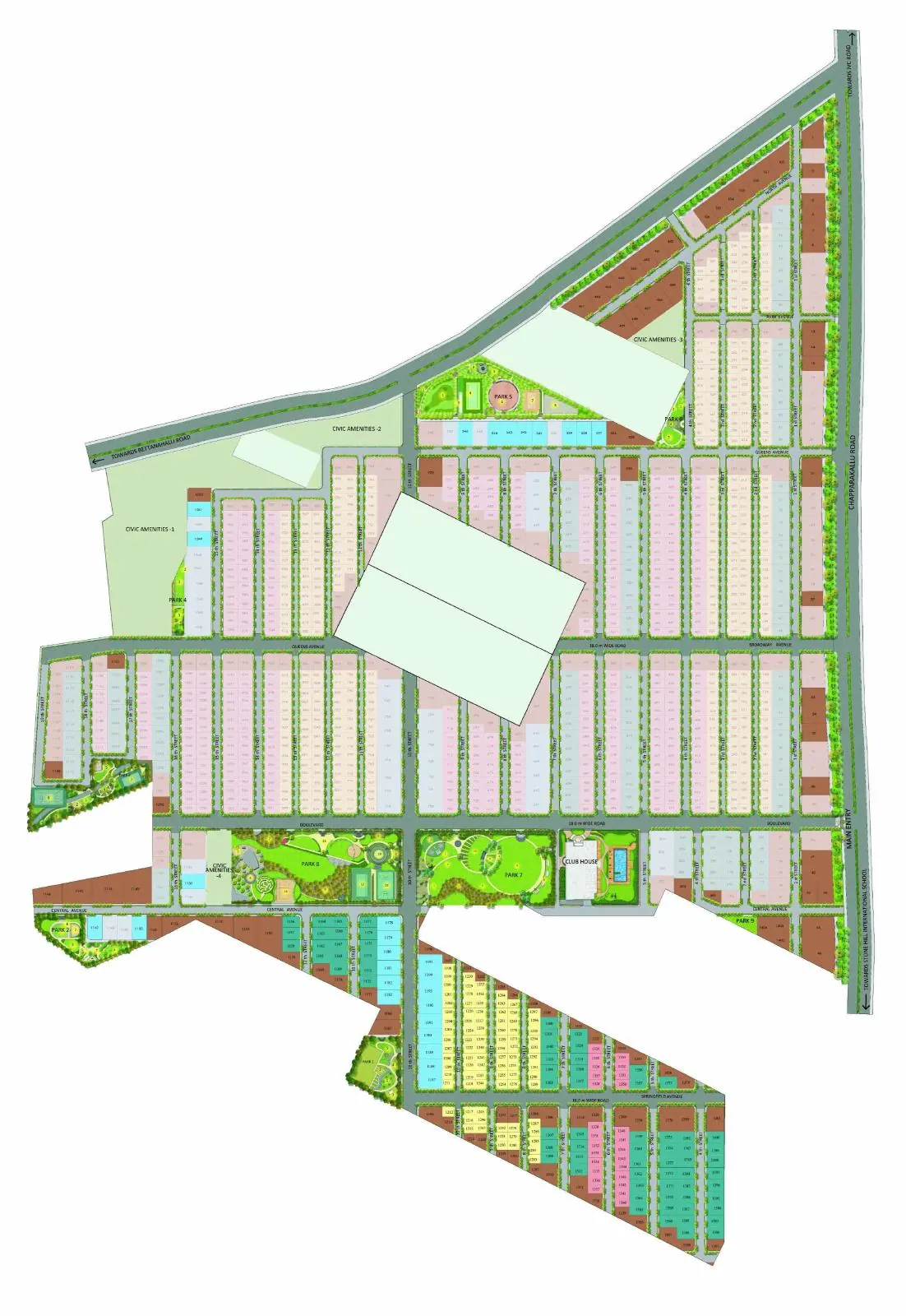
Take Adarsh Savana Phase 3, a plotted development in Devanahalli, as an example. See its legal section for the approvals listed. Then confirm each one on the official portals yourself.
Browse more options on our plots in Bangalore page. If you plan to compare layouts, our plot vs apartment guide sets out the trade-offs.
Quick Checklist Before You Pay a Token
- Get the ePID or e-Swathu property number
- Confirm A or B status on the portal
- Confirm the e-khata is final, not draft
- Match owner name, size and survey number
- Get tax receipts for three years
- Ask your bank for written loan approval
- For B khata, get the conversion fee in writing
- Have a property lawyer read every document
Want to see an approved layout in person? Book a site visit and ask our team for the approval copies on the day.
Sources
- GBA e-Aasthi portal (e-khata)
- Deccan Herald — GBA cuts B khata conversion charges from 5% to 2% of guidance value for 100 days from May 15 (13 May 2026)
- Deccan Herald — GBA opens 52 centres from May 16 for final e-khata and B-to-A conversion under Bhu Guarantee (13 May 2026)
- Deccan Herald — Cabinet approves B to A khata conversion across urban local bodies (9 January 2026)
- Deccan Herald — Sub-registrars suspended for registering properties without mandatory e-khata verification (4 January 2026)
- Deccan Herald — e-khata mandatory for building plan approvals from July 1, 2025
- Deccan Herald — Greater Bengaluru Governance Act to take effect from May 15 (2025)
- Deccan Herald — Five new corporations: Central, East, North, South and West (30 September 2025)
- Deccan Herald — Five corporations to have 369 wards under the Greater Bengaluru Governance Act, 2024 (19 November 2025)
- ETV Bharat — Cabinet clears B khatas for unauthorised village properties (14 March 2025)
- e-Swathu (rural property records, Karnataka)
- K-RERA project search
Frequently asked questions
What is the difference between A khata and B khata?
An A khata marks a property that meets all legal and planning rules. A B khata marks a property with a gap, such as no layout approval or no land conversion. The B khata lets the city collect tax, but it does not prove the property is legal.
Is e-khata different from A khata?
E-khata is the digital khata record on the GBA e-Aasthi portal. It shows whether a property sits in the A register or the B register. So an e-khata can carry either an A or a B status.
Can I get a home loan on a B khata property?
Most big banks avoid B khata properties or lend less on them. Some lenders do fund them at higher rates. Ask the bank for a written in-principle approval before you pay a token.
What is the fee to convert B khata to A khata?
Deccan Herald reported that the GBA charge is 5% of the guidance value. The GBA cut it to 2% for 100 days from 15 May 2026, and that window has now closed. Confirm the current rate on the GBA portal before you apply.
How do I check the khata of a property online?
Open bbmpeaasthi.karnataka.gov.in, log in with your mobile OTP, and search by ePID or owner name. The record shows the owner, the site size and the khata type. For village land, use the e-Swathu portal.
Should I buy a B khata plot in 2026?
Only if the price reflects the risk and you have a lawyer's report. You will pay a conversion fee, wait for approval, and may struggle to get a loan. An A khata plot in an approved layout is the safer choice for most buyers.
Adarsh Projects Research Desk
Channel-partner research team · Last reviewed 15 Sept 2026
We track K-RERA filings, price sheets and site progress for every Adarsh project in Bengaluru.
This guide is general information, not legal, tax or investment advice. Prices marked * are indicative as of September 2026.