Plot vs apartment investment in Bangalore comes down to growth and rent. In our illustrative ₹88 lakh model, a rented flat growing 5% a year beats a plot unless the plot grows about 7.4% a year. Loans, GST and upkeep shift the gap.
This page shows every step of that maths. We state all inputs up front. Change them to match your own case, and the answer may change too. The ₹88 lakh figure sits close to the indicative entry price of Adarsh Savana Phase 3 plots in Devanahalli.
Quick comparison
| Factor | Plot | Apartment |
|---|---|---|
| Rent | None until you build | Yes, once ready |
| Loan share | About 60–75% of value | RBI cap of 75–90% |
| Tax break on loan | After you build | Yes, rules depend on regime |
| GST | Depends on how land and services are billed | 5% if under construction (1% if affordable) |
| Monthly upkeep | Low | Maintenance fee |
| Ageing | Land does not age | Building ages |
| Control | Build as you like | Fixed plan |
| Resale buyer pool | Mainly people who plan to build | Home buyers and investors |
The assumptions behind our example
These inputs are illustrative. They are not a quote for any project. We chose round numbers close to what public data shows in 2026.
| Input | Plot | Apartment |
|---|---|---|
| Price | ₹88 lakh | ₹88 lakh |
| Size | 1,200 sq ft of land | 1,300 sq ft super built-up |
| Status | Ready to register | Ready to move (we assume no GST) |
| Stamp duty, cess and registration | 7.6% | 7.6% |
| Loan share | 70% | 75% |
| Interest rate | 8.5% a year | 7.5% a year |
| Loan tenure | 20 years | 20 years |
| Rent | None | 3.5% of price in year 1, up 5% a year |
| Running costs | ₹30,000 a year | ₹70,200 upkeep + ₹15,000 tax a year |
| Hold period | 10 years | 10 years |
| Selling cost | 1% of sale price | 1% of sale price |
Here is why we picked each one.
Price and stamp duty
We use ₹88 lakh for both, so the gap comes only from how each asset behaves. Deccan Herald reported in August 2025 that Karnataka buyers pay 5% stamp duty and about 0.6% in cess. The registration fee rose from 1% to 2% on 31 August 2025.
That gives about 7.6%, or ₹6.69 lakh on ₹88 lakh. Check the current rates with your lawyer before you buy.
Loan share
RBI caps home loans at 75% of value for property above ₹75 lakh, per Business Standard. So the flat gets a ₹66 lakh loan.
Plot loans follow each lender's own policy. Business Standard's plot loan guide says lenders may fund 60% to 75% of a plot's value. We use 70%, or ₹61.6 lakh.
Interest rate
The RBI held the repo rate at 5.25% in August 2026, per Business Standard. In late August 2026, Business Standard found home loan rates starting at 7% a year. Its plot loan guide says some lenders charge more for plots, based on the case. We use 7.5% for the flat and 8.5% for the plot.
Rent
Business Standard reported a Bengaluru average rental yield of 4.6% in 2026. Yields vary by area. We use 3.5% to stay on the cautious side. That is ₹3.08 lakh in year 1, or about ₹25,700 a month.
Maintenance
We found no official or major-news figure for Bengaluru maintenance fees. So we assume ₹4.50 per sq ft a month. On 1,300 sq ft, that is ₹5,850 a month, or ₹70,200 a year. We add ₹15,000 a year for property tax as a round guess.
For the plot, we assume ₹30,000 a year. That covers tax, cleaning and any layout fees. Ask the builder or the sales desk for the real rates. Our Adarsh Parkland Phase 2 review shows what to ask on a flat.
Step 1: cash you pay up front
| Item | Plot | Apartment |
|---|---|---|
| Price | ₹88.00 lakh | ₹88.00 lakh |
| Loan | ₹61.60 lakh | ₹66.00 lakh |
| Down payment | ₹26.40 lakh | ₹22.00 lakh |
| Stamp duty, cess and registration | ₹6.69 lakh | ₹6.69 lakh |
| GST | ₹0 (assumed) | ₹0 (ready flat, assumed) |
| Total cash up front | ₹33.09 lakh | ₹28.69 lakh |
The plot needs ₹4.4 lakh more cash on day one. That is only because the loan share is lower. If your lender offers 75% on a plot, the gap closes.
Legal fees, broker fees and loan processing fees are extra in both cases. We left them out to keep the model simple.
Step 2: the loan over 10 years
| Item | Plot | Apartment |
|---|---|---|
| Monthly EMI | ₹53,458 | ₹53,169 |
| EMIs paid in 10 years | ₹64.15 lakh | ₹63.80 lakh |
| Interest inside those EMIs | ₹45.67 lakh | ₹42.60 lakh |
| Loan still owed after 10 years | ₹43.12 lakh | ₹44.79 lakh |
The EMIs look almost the same. The plot has a smaller loan but a higher rate. Over 10 years, the plot buyer pays about ₹3 lakh more in interest.
The bigger gap is tax. Business Standard's plot loan guide says you can claim a tax benefit on a plot loan only after you finish building a house. Rules change, so ask a chartered accountant.
A home loan on a flat can give interest and principal deductions. How much you save depends on your tax regime and whether you rent the flat out. We left tax savings out of the model for both assets.
Want the full loan picture? Read our plot loan vs home loan guide.
Step 3: rent and running costs
| Item over 10 years | Plot | Apartment |
|---|---|---|
| Rent received | ₹0 | ₹38.74 lakh |
| Maintenance and tax paid | ₹3.00 lakh | ₹8.52 lakh |
| Net cash from holding | –₹3.00 lakh | +₹30.22 lakh |
This is where the flat pulls ahead. Rent grows each year in our model, from ₹3.08 lakh to about ₹4.78 lakh in year 10. After upkeep, the flat puts about ₹30 lakh back in your pocket.
We assumed the flat never sits empty. In real life, you may lose a month or two between tenants. You will also pay for repairs and paint. Knock a few lakh off the rent line to stay safe.
The plot costs little to hold. But it earns nothing. Every EMI comes from your salary. Our honest verdict on Devanahalli weighs this for one plot market.
Step 4: growth and sale price
Nobody knows future growth. So we test two rates for each asset.
| Yearly growth (assumed) | Value after 10 years |
|---|---|
| 5% | ₹143.34 lakh |
| 7% | ₹173.11 lakh |
| 8% | ₹190.00 lakh |
For context, Business Standard reported a city study in August 2026. Bengaluru's average capital value rose from ₹4,975 per sq ft in 2019 to ₹9,450 in Q2 2026. That is a 90% rise over about seven years, or roughly 9% to 10% a year.
That figure tracks city apartments, not plots. Local numbers can be much lower, and past growth does not promise future growth. Our Devanahalli market guide explains how to test local prices.
Why plots may grow faster
A flat has two parts: a share of land and a building. The building ages and needs repairs. Land does not age. So over a long hold, a plot has more room to grow in value.
Why flats may hold up better in job hubs
Flats near offices have a steady pool of tenants and buyers. Plots far from jobs depend on future growth. In a slow market, a plot can sit with few buyers.
Step 5: the result
Here is the net gain after 10 years. We define it as sale price, minus selling cost, minus the loan still owed, minus all cash you paid, plus rent received.
| Scenario | Plot | Apartment |
|---|---|---|
| Both grow 5% a year | about –₹1.4 lakh | about ₹34.9 lakh |
| Both grow 7% a year | about ₹28.0 lakh | about ₹64.3 lakh |
| Plot 7%, flat 5% | about ₹28.0 lakh | about ₹34.9 lakh |
| Plot 8%, flat 5% | about ₹44.7 lakh | about ₹34.9 lakh |
Three points stand out.
- At equal growth, the rented flat wins by a wide margin.
- Even at 7% against 5%, the flat still edges ahead.
- The plot wins only when its growth runs clearly ahead of the flat's.
The break-even rate
We solved for the plot growth rate that matches a flat growing 5%. The answer is about 7.4% a year. That is the bar a plot must clear in this model.
If you buy both with cash and no loan, the bar is about 7.2%. Rent still does most of the work for the flat. The investment view on Adarsh Savana Phase 3 sets this bar against one plotted layout.
What if the flat is under construction?
Builders in Bangalore sell many flats before they finish them. That changes two things.
First, GST applies. The GST Council set 5% GST on under-construction homes outside the affordable segment, and 1% on affordable homes, per PIB. On ₹88 lakh, 5% is ₹4.4 lakh. Ask a CA whether GST applies to a ready flat you plan to buy.
Second, rent starts later. If the flat takes three years to finish, you lose three years of rent.
We reran the model with 5% GST and rent only in years 4 to 10. The flat's net gain at 5% growth fell from about ₹34.9 lakh to about ₹20.7 lakh. That still beats a plot at 5%, but the gap is much smaller.
This rerun keeps full EMIs from day one to stay simple. In practice, banks release under-construction loans in stages. So your interest in the early years may be lower. Compare two flats still being built, Adarsh Tropica Phase 2 and Adarsh Parkland Phase 2, on their payment plans.
GST on plots: read the cost sheet
Many plotted projects add roads, drains, water lines and power lines. The seller may bill some of that work as a separate service. That can change the GST on your deal.
Ask the builder for a cost sheet that splits land cost and development cost. Then ask your lawyer or CA how GST applies. Two plots with the same headline price can end up with very different final bills. See the Adarsh Savana Phase 3 price list for a cost sheet broken down line by line.
Liquidity: how fast can you sell?
Returns matter only if you can sell when you need to. Here is how the two compare.
| Liquidity factor | Plot | Apartment |
|---|---|---|
| Who buys | Mostly people who plan to build | Home buyers and investors |
| Bank loan for the buyer | Plot loan, lower share | Home loan, higher share |
| Proof of value | Few recent deals in new areas | More deals in built-up areas |
| Can you rent while you wait? | No | Yes |
A flat in a job hub often sells faster, since more buyers can get a big loan. A flat can also earn rent while you wait for the right price.
A plot in a busy, well-approved layout can sell well too. But a plot in an empty layout with weak papers can sit for a long time. Clean documents matter even more for plots. Use our list of documents to check before buying a plot.
What about building on the plot?
Many plot buyers plan to build a house later. That changes the maths in both directions.
A house on your plot can earn rent. It also opens the door to tax benefits on the loan, per Business Standard's plot loan guide. And you get a home built to your own plan.
But building costs money and time. You need a second loan or more savings. You need an architect, a contractor and plan approval. Costs can rise while work is on.
If you plan to build, ask lenders for one loan that covers the plot and the build. Ask how they release funds and what the rate is. Our plot loan vs home loan guide compares the options.
Mistakes buyers make in this choice
We see the same errors in both camps. Watch for these. For flats, the Adarsh Rosewood Bellandur review shows how we test a ready option.
Plot buyers
- Counting on a fixed growth rate. Brochures often quote big past gains. Your 10-year result depends on the next 10 years, not the last.
- Forgetting the EMI with no rent. A plot EMI runs every month from your salary.
- Skipping the cost sheet. Development and club charges can add a lot to the base price.
Apartment buyers
- Assuming full rent every month. Tenants leave. Plan for gaps.
- Ignoring maintenance hikes. Fees tend to rise after handover.
- Forgetting GST on under-construction flats. 5% on ₹88 lakh is ₹4.4 lakh.
Both
- Stretching the loan. Keep an emergency fund of at least 12 months of EMIs.
- Trusting online RERA numbers. Always check the K-RERA portal yourself.
What our model leaves out
No model covers everything. These items can shift your answer.
- Income tax on rent. Rent is taxable. This cuts the flat's lead.
- Tax savings on the home loan. These can help the flat, based on your regime.
- Capital gains tax. Both assets pay it on sale. The rules depend on your holding period and the law at the time.
- Vacancy and repairs. Real rent is lower than our smooth line.
- Maintenance hikes. Charges can rise after the residents' association takes over. Ask current owners what they pay.
- Building a house. If you build on the plot, it can earn rent too. But that needs a second loan and more cash.
- Khata and approvals. A B khata or weak approval can hurt resale for both. Our A khata vs B khata vs E khata guide explains why.
Who should pick a plot
A plot suits you if most of these are true.
- You will hold for 10 years or more.
- You can pay EMIs from salary with no rent.
- You want to build your own home one day.
- You believe the area's land value will grow faster than local flats.
- You will check title, DC conversion and layout approval with a lawyer.
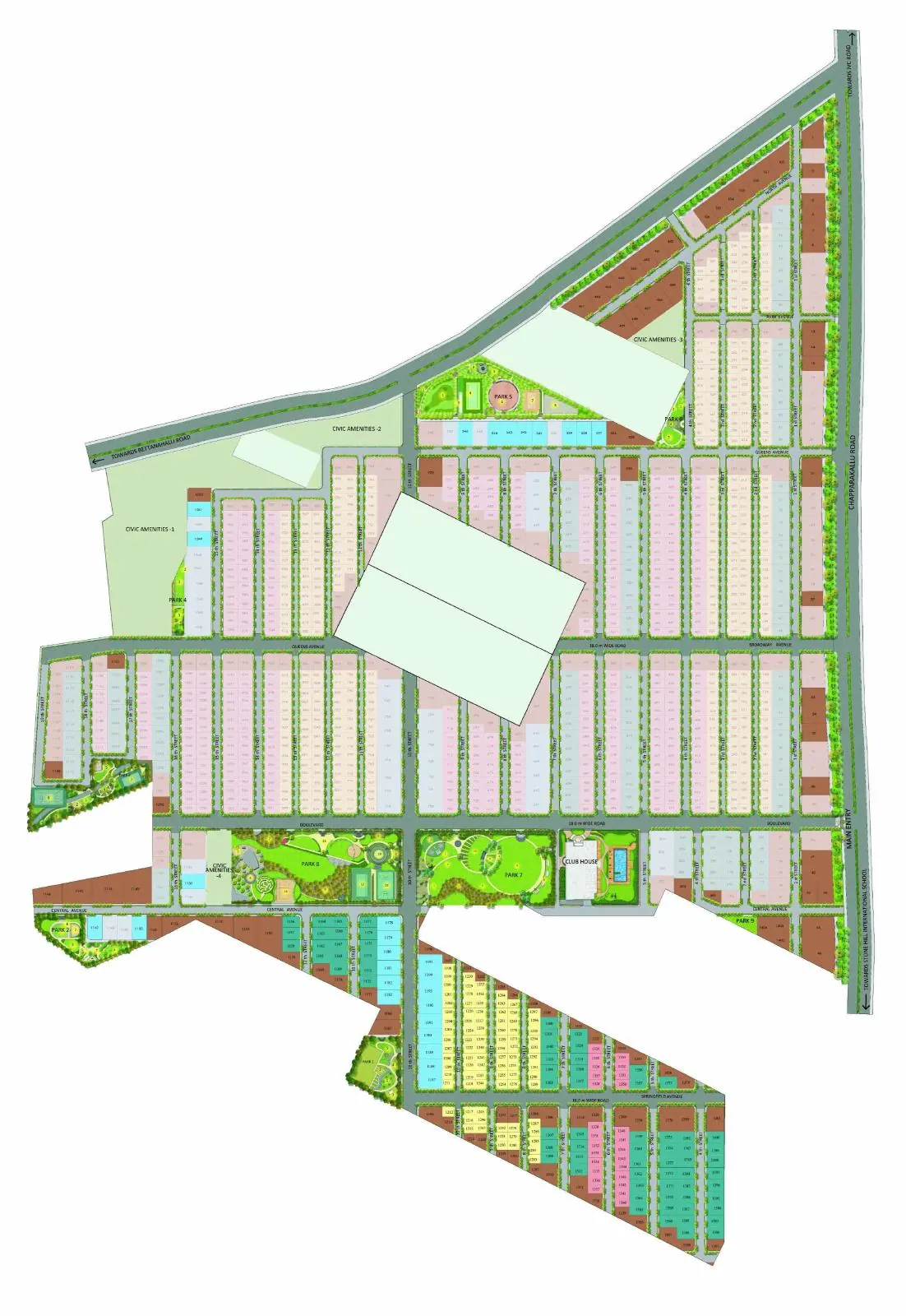
In North Bangalore, Adarsh Savana Phase 3 is one plotted option near the airport. Its indicative starting price is ₹88.25 lakh* as of September 2026. See the investment view on the project page before you decide.
For the area, read our Devanahalli property investment guide. For an honest yes or no, read is Devanahalli a good investment.
Who should pick an apartment
An apartment suits you if most of these are true.
- You need rent to help pay the EMI.
- You have less cash for a down payment.
- You may need to sell within 5 years.
- You want to live in the home or rent it out soon.
- You prefer a site with security and upkeep handled for you.
In East Bangalore, compare Adarsh Parkland Phase 2 on Panathur Main Road, Adarsh Tropica Phase 2 off Sarjapur Road and Adarsh Rosewood in Bellandur. Check each one's RERA details and cost sheet first.
*Indicative price as of September 2026. Confirm with the Adarsh sales desk.
Run your own numbers
Use this checklist to redo our maths for any real deal.
- Get a signed cost sheet with every charge.
- Ask two lenders for the loan share and rate in writing.
- Check local rents with two agents for the same size and area.
- Ask the builder or association for the current maintenance rate.
- Pick three growth rates: low, middle and high.
- Work out the net gain for each one after 10 years.
- Find the growth rate the plot needs to match the flat.
If that break-even rate looks hard to reach in your chosen area, the flat is the safer bet. If it looks easy, the plot may be worth the wait.
Bottom line
In our illustrative model, rent gives the flat a large head start. A plot has to grow about 7.4% a year to match a flat growing 5%. Plots also need more cash up front and give no tax break until you build.
Plots still make sense for patient buyers in areas with strong land demand. Flats make more sense for buyers who need income or a quick exit. Run the numbers on the actual project, then book a site visit before you pay anything.
Sources
- Business Standard — 125% price gains, higher rental yields in housing hotspots (4 Aug 2026)
- Deccan Herald — Property deals to cost more: registration fee hiked to 2% (30 Aug 2025)
- PIB — Recommendations of the 33rd GST Council meeting on residential real estate (24 Feb 2019)
- Business Standard — Home buyers can get more loan for property up to ₹30 lakh (RBI LTV caps, 8 Oct 2015)
- Business Standard — Guide to construct your own house on a plot (plot loans, 2015)
- Business Standard — RBI MPC keeps repo rate unchanged at 5.25% (5 Aug 2026)
- Business Standard — Home loan rates start at 7% in August (27 Aug 2026)
- K-RERA project search
Frequently asked questions
Which is a better investment in Bangalore, a plot or an apartment?
It depends on growth and rent. In our illustrative ₹88 lakh model, a rented flat growing at 5% a year beats a plot unless the plot grows about 7.4% a year. Change the inputs and the answer can flip.
Do plots appreciate faster than apartments?
Land does not age, while a building does, so plots often have more room to grow. But no source guarantees a faster rate. Check local deal data, not brochure claims.
Is there GST on buying a plot?
It depends on how the seller bills the deal. Development work such as water lines, drains or levelling may be billed as a service. Ask for a cost sheet that splits land and services, and ask a CA how GST applies.
How much loan can I get for a plot compared with a flat?
RBI caps home loans at 90%, 80% or 75% of value, based on property cost. Business Standard's plot loan guide says lenders may fund 60% to 75% of a plot. So a plot needs more cash up front.
What rental yield do Bangalore apartments give?
Business Standard reported a Bengaluru average rental yield of 4.6% in 2026, up from 3.6% in 2019. Yields vary by area, and a plot gives no rent until you build.
Is a plot easier to sell than an apartment?
Not always. A plot in a lived-in, well-approved layout sells well. A plot in an empty or poorly approved layout can take a long time. Flats in job hubs often have a wider pool of buyers and tenants.
Adarsh Projects Research Desk
Channel-partner research team · Last reviewed 16 Sept 2026
We track K-RERA filings, price sheets and site progress for every Adarsh project in Bengaluru.
This guide is general information, not legal, tax or investment advice. Prices marked * are indicative as of September 2026.